 Tvoi Concierge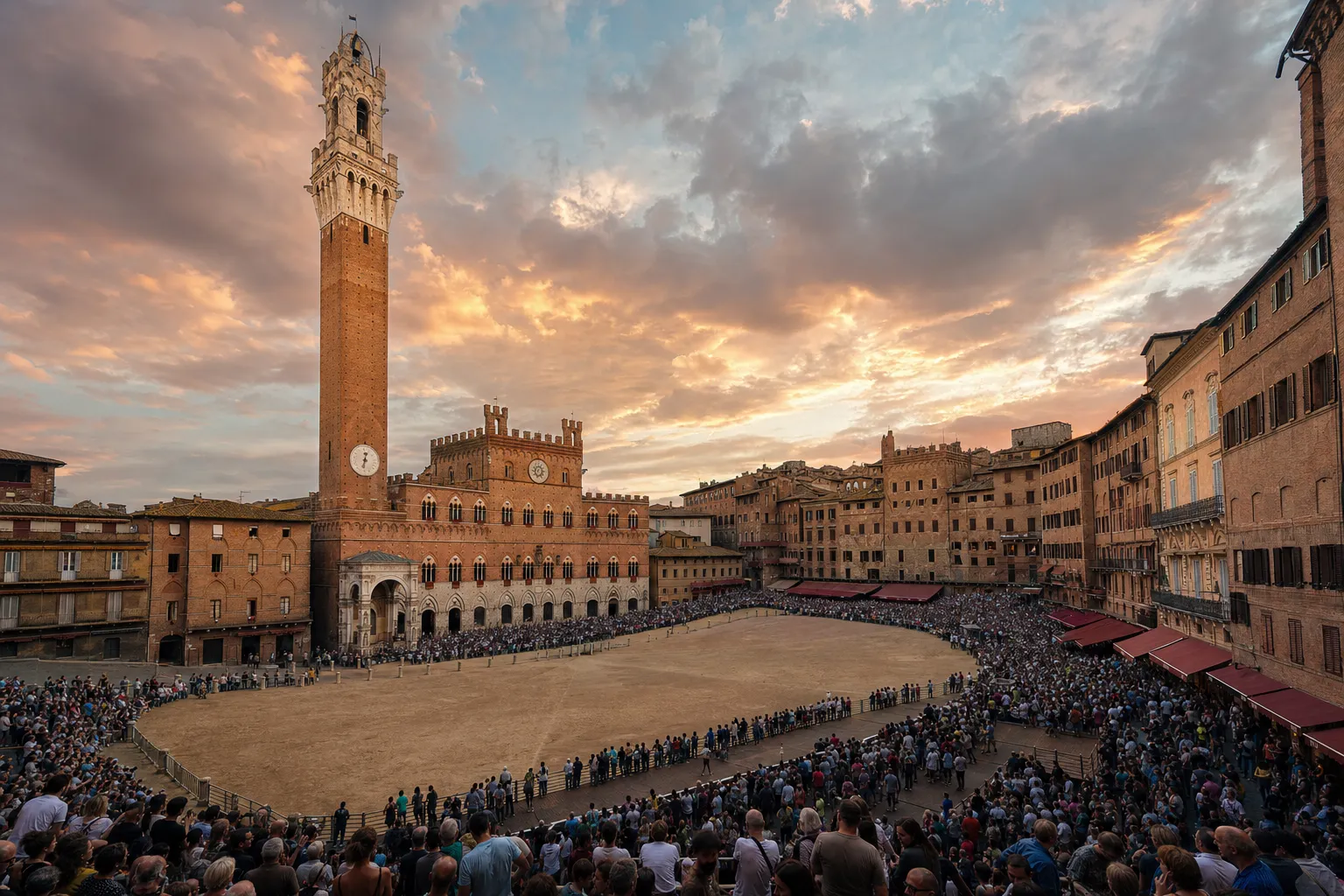
The Palio di Siena is not a costumed spectacle staged for tourists; it is the life of the city compressed into ninety furious seconds around the Piazza del Campo. Twice a year, on 2 July and 16 August, ten of Siena's seventeen contrade run bareback horses, and a whole year of loyalty, alliance and rivalry pours into a single race. To understand the Palio is to understand Siena. But to avoid standing for four hours in the July heat and still see the start, the treacherous San Martino corner and the finish, you need to plan ahead and with local knowledge. Below is what happens across the days, where to watch, how to secure a window or balcony, and how to build a day that flows beautifully.
The two dates and why they sell out
The race is run strictly twice a year: on 2 July (the Palio di Provenzano) and on 16 August (the Palio dell'Assunta), with an occasional extraordinary Palio for a special anniversary. Each race honours a particular Madonna, and for the Sienese it is not entertainment but the rhythm of the year. That is why everything worth having, the windows on the square, the palazzo balconies, the grandstand seats, is spoken for far in advance, often through personal ties held for generations. Free standing entry to the centre of the square is free, but it fills from morning, the gates close, and you cannot leave until the race is over. Leaving arrangements late means watching from outside the walls; this is a matter to settle months ahead.
The contrade and what the race means
Siena is divided into seventeen contrade, city wards each with its own colours, crest, church, museum and centuries-old rivalries. The Wave, the Caterpillar, the Eagle, the Tortoise, each carries its own honour and its long memory of triumphs and grudges. In the Palio days a contrada lives as one body: long communal dinners in the street, songs, processions with drummers and flag-throwers (the alfieri, who spin their banners in a signature style). Winning the Palio is not a prize but an honour celebrated for months. Grasping this fabric turns the race from a show into an event you are, in a small way, part of, especially if you join a contrada dinner the evening before.
What happens across the days
The Palio is not one day but several. Three days before the race the horses are drawn and assigned (the tratta), after which the trial races (prove) begin, two a day, morning and evening, with the prova generale on the eve. On race morning a mass is said, and the horse is blessed inside its contrada church in a moving ritual; if the animal leaves droppings, it is taken as a lucky omen. In the afternoon the Corteo Storico unfolds, a historical procession of hundreds in Renaissance costume with banners and the Carroccio ox-cart. Only towards evening, as the shadows lengthen, are the horses led out, and after the mortaretto signal the three-lap race begins.
Where to watch: square, windows, balconies, stands
The centre of the Piazza del Campo (il campo) is free, but it means a dense standing crowd for hours with no exit, no shade and little view of the start; atmospheric, yet demanding. Paid options bring comfort and sightlines. Seats on the wooden grandstands (palchi) around the rim are sold by the owners of the adjoining buildings and by venues. The finest option is a palazzo window or balcony: private, shaded, with refreshments and a panorama of the whole Campo, including the dangerous San Martino corner and the Casato. Windows and balconies typically start from a few hundred euros per place and rise with the floor and the view; it is the calmest and most rewarding way to see the Palio.
Where to stay and how to shape the day
In the Palio days Siena's own hotels are booked months ahead and at premium rates. A sound approach is to stay in the historic centre a short walk from the Campo, so you are not at the mercy of closed streets and crowds, or to choose a country villa or relais in the Chianti twenty to forty minutes out and arrive with a driver. Shape the day like this: an unhurried lunch, the historical procession, the race from a window or balcony, then dinner in a trattoria away from the tourist flow. Ideally add a visit to a contrada museum and its church before the race, so you feel the meaning of it all rather than merely watching the finish.
Before the Palio checklist
- Pick your date, 2 July or 16 August, and arrange access several months ahead
- Decide your vantage: the square, a grandstand, or a palazzo window or balcony
- Book a hotel in central Siena or a Chianti villa with a private transfer
- Confirm the timing of the historical procession and the likely race start
- Dress for the heat: light clothing, a hat, water and comfortable shoes
- Plan a visit to a contrada museum and church before the race
- Sort out a driver and parking, as the centre closes and crowds surge after
- Reserve dinner in advance; the city's kitchens are overwhelmed on these days
Let us arrange your Palio
We secure the best window and balcony views, access, your hotel or villa, a driver, dinner and a contrada visit. Message Olga through the request form, WhatsApp or Telegram and we will arrange your Palio day turnkey.