 Tvoi Concierge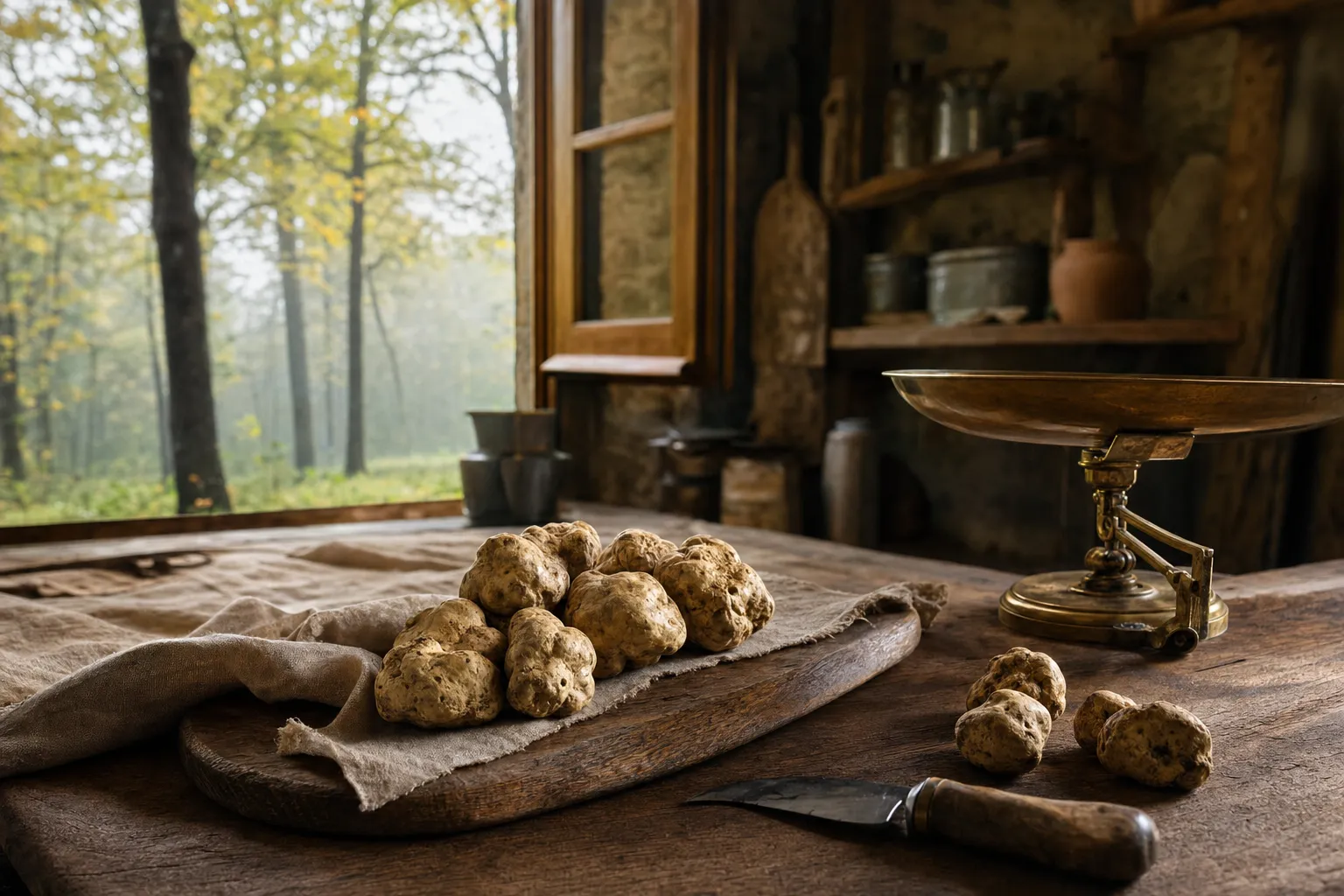
In Tuscany, truffle is not a souvenir but a season, with its own calendar, its own hills and its own rituals. The celebrated white truffle of San Miniato and the more accessible black varieties follow different rules: some emerge from beneath the oaks in late autumn, others wait for summer. Understanding this in advance is the difference between arriving in the right week, joining a genuine hunt with a trifolau and his dog, and sitting down where truffle is truly understood. This guide from Tvoi Concierge is a short but honest primer for the discerning traveler: how the white truffle differs from the black and where to find each, what happens at the National White Truffle Market in San Miniato, how a private hunt unfolds, where to taste and dine, and how to choose and store fresh truffle. The harvest depends on the weather and shifts from year to year, so treat this as a working framework and confirm exact dates and availability for your specific trip.
White versus black: two truffles, two seasons
The white truffle (Tuber magnatum pico) is the summit of Tuscan gastronomy and the main reason to come in autumn. It is gathered roughly from late September into December, peaking in November, when both aroma and price reach their height. White truffle is never cooked: it is shaved raw and paper-thin over tagliatelle, fried eggs or risotto so that not a single note is lost. Black truffles work differently. The prized winter black (tartufo nero pregiato) runs roughly December to March, while the summer scorzone runs from May into August or September. Black truffle tolerates gentle heat and blooms in sauces and with meat. If your goal is the white truffle, plan for autumn; if you want a hunt and tastings in warmer months, black truffle is available for much of the year.
Where to hunt: San Miniato, the Crete Senesi and the Val d'Orcia hills
The capital of the Tuscan white truffle is San Miniato, a hill town between Florence and Pisa; the oak and poplar woods along the streams around it yield the renowned white truffle for which the whole area is famous. The second great habitat is the clay hills of the Crete Senesi, southeast of Siena, where San Giovanni d'Asso (now part of the Montalcino comune) was historically the heart of the truffle trade and still holds an autumn fair. In the surrounding Val d'Orcia you find both white and black truffle. For the traveler this is convenient: San Miniato is under an hour from Florence, and the Crete Senesi pair naturally with the wines of Montalcino and Montepulciano on one trip.
The San Miniato White Truffle Market
The National White Truffle Market in San Miniato is the highlight of the season, held traditionally over the last three weekends of November. The historic center becomes a great food market: stalls of local trifolau and dealers where the truffle is weighed in front of you, stands of Tuscan produce (pecorino, olive oil, cured meats, wine), truffle street food and tastings. It is the best chance to see, touch and smell dozens of tubers at once and compare quality. On those weekends the town is packed, parking and the good restaurant tables are taken well in advance, so both your arrival and your lunch are worth planning ahead rather than trusting to luck on the day.
Going on a hunt with a trifolau and his dog
A real truffle hunt means walking into the woods with a trifolau, a local hunter, and his trained dog (usually an affectionate Lagotto Romagnolo). The dog follows the scent and points the spot, and the trifolau carefully lifts the tuber with a small spade (vanghetto), taking care not to damage the network beneath so the ground will produce again. The walk usually lasts one to two hours over the hills, often in the morning, and ends with the find being weighed and frequently cooked on the spot. This is a family craft passed down over generations, and a good trifolau will explain how to read the woods, which trees and soils truffle loves and what makes each season different. For a family with children and for guests seeing truffle in the wild for the first time, it is one of the season's strongest experiences.
Tastings, truffle menus and restaurants
A whole cuisine is built around the truffle. In season, many osterie and restaurants in San Miniato, Siena, Florence and the hills introduce a dedicated truffle menu: tagliatelle or tagliolini with white truffle, fried eggs, risotto, simple dishes where the shaved truffle plays the lead. The gourmet rule: white truffle is added only at the end, raw, over something hot, while black can be warmed gently. Beyond restaurants there are wineries and estates that host tastings of truffle products (oils, sauces, honey, cheeses) paired with local wines such as Chianti or Brunello. Note that truffle-flavored oil and fresh shaved truffle are different worlds; a good place will always show you the tuber itself.
How to choose, buy and store fresh truffle
You choose fresh truffle by nose and by touch: it should be firm, fragrant without any note of ammonia or fermentation, free of soft or rotten patches, with fresh earth still on it. It should be sold in front of you on the scales, and a good trifolau will explain the origin and variety. At home truffle keeps only briefly: wrap each tuber in a paper towel, place it in a sealed jar in the fridge and change the paper daily; white lasts a few days, black a little longer. Do not store it in rice (it dries it out) and do not wash it in advance. Mind the export rules: before carrying truffle across a border, check your country's import regulations in advance. If you want to take the flavor home, quality preserved products travel more reliably, while the fresh tuber is best eaten there, at its peak.
Truffle trip checklist
- Decide your target: white truffle (autumn, peak in November) or black (summer and winter)
- Book a private hunt with a trifolau and dog ahead; places are limited
- Time a visit to the San Miniato market for the last three weekends of November
- Reserve tables at truffle restaurants early, especially on market weekends
- Plan logistics and parking; the towns are crowded in high season
- Buy truffle only when it is weighed, checking aroma, firmness and origin
- Confirm storage rules and any restrictions on carrying fresh truffle abroad
- Combine the trip with the wines of Chianti, Montalcino or Montepulciano
Let us arrange your truffle season
Tvoi Concierge organizes it all turnkey: a private hunt with a trifolau, tastings, tables at the best restaurants and smooth logistics across Tuscany. Message us via the request form, WhatsApp or Telegram and we will pick the perfect week.