 Tvoi Concierge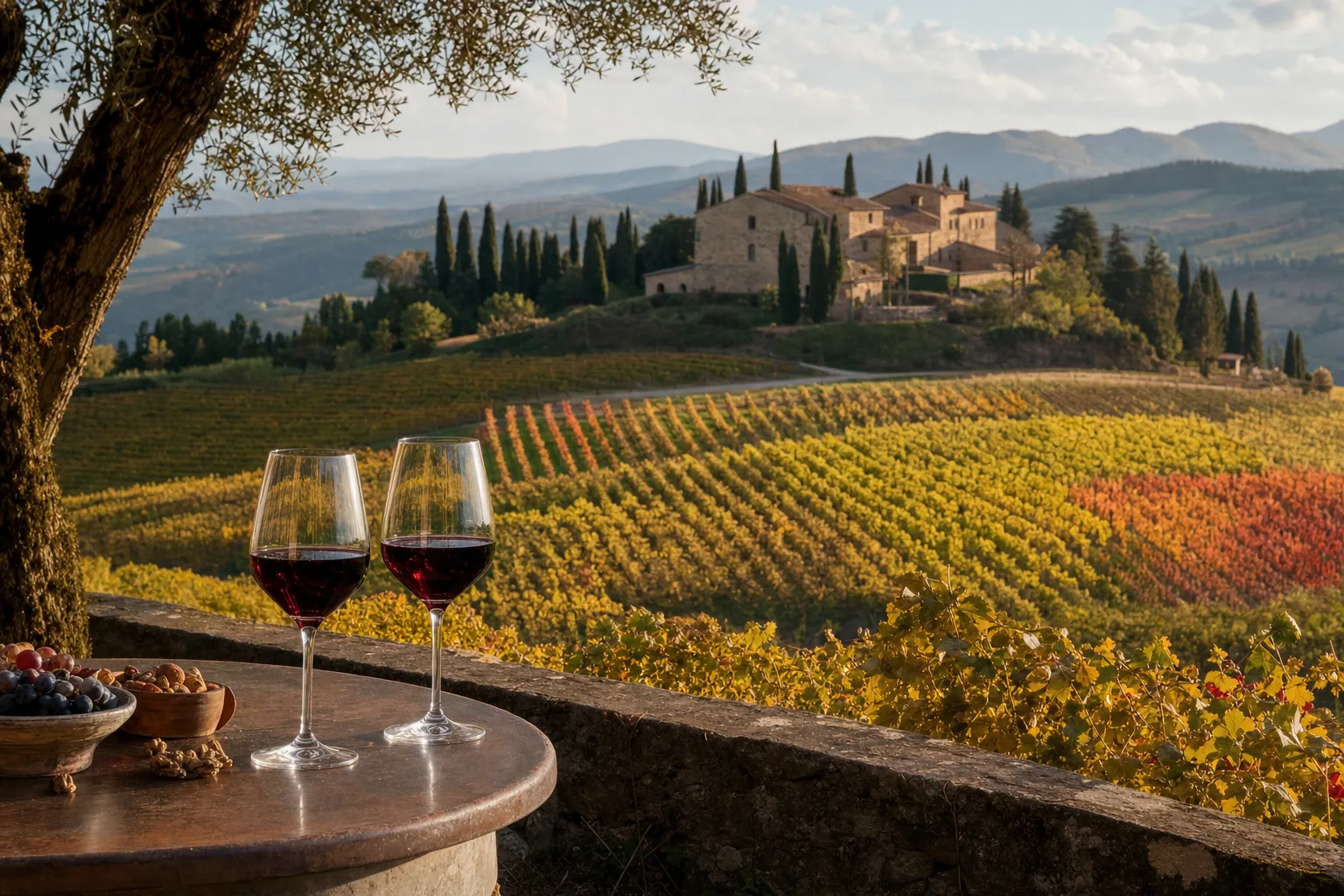
Tuscany holds several wine worlds at once, and the real pleasure is travelling through them properly in a single trip: feeling the difference between the poised Sangiovese of the Chianti Classico hills, the deep, ageworthy Brunello di Montalcino, and the maritime, almost Bordeaux-style Super Tuscans of the Bolgheri coast. This is not a race through ten estates a day. It is a calm, well-planned route built around private visits, a good driver and the right season. Below we set out the key appellations and what defines them, the geography and a sensible route, why the September vendemmia is so special, how to pair these wines with Tuscan food, and why a private tasting route arranged with introductions beats any walk-in.
The key appellations and what defines them
Chianti Classico, marked by the Gallo Nero (black rooster), is the heart of the region between Florence and Siena: elegant Sangiovese with cherry, earth and herbs, at its finest in the Gran Selezione tier. Brunello di Montalcino is pure Sangiovese (called Brunello here), fuller and built to age for decades; nearby Vino Nobile di Montepulciano is softer and more welcoming. On the coast, Bolgheri is Super Tuscan country, Cabernet and Merlot led, born with Sassicaia. Once you grasp these four characters, a tasting becomes a story rather than a random set of glasses.
Geography and a sensible route
Distances are deceptive: as the crow flies it looks close, but the roads wind through the hills, so the sensible logic is to group visits by zone. A classic arc: two or three days in Chianti Classico based near Greve or Radda, then south to Montalcino and Montepulciano, where an overnight stay pays off. Bolgheri and the coast are a separate accent, closer to the Maremma and the sea, ideal as a finale with lunch by the water. We suggest no more than two estates a day so there is time for the landscape, a proper lunch and an unhurried conversation with the winemaker.
Private estate visits versus walk-ins
The difference is enormous. A walk-in, at best, means a shared tasting room and the standard range. A private visit arranged in advance opens cellars, older vintages, a meeting with the enologist or the owner, barrel tastings during the vendemmia, and wines that never reach the shelves. Many of the top estates in Bolgheri and Montalcino receive strictly by appointment and by personal introduction. This is exactly where a concierge earns its place: established relationships with estates turn a tasting into a private, genuinely exclusive experience you could not book alone.
The vendemmia: why September is special
The harvest, the vendemmia, usually falls in September and early October, and it is the most alive moment in wine-country Tuscany. The vineyards are heavy with fruit, the air smells of must, and the cellars hum with work. You can watch sorting and pressing, taste young must, and sometimes join the picking itself. Estates are especially warm at this time, but also especially busy, so visits must be agreed well in advance. The September weather is mild and golden: the ideal season for anyone who wants to see wine not in the glass but at the moment of its making.
Wine and Tuscan food
Tuscan wines were born at the table. Chianti Sangiovese calls for ribollita, Pienza pecorino, pappardelle al cinghiale (wild boar) or a bistecca alla fiorentina. The powerful Brunello opens up with aged meats, game and truffle in late autumn. Bolgheri's Super Tuscans shine with lamb and the seafood of the coast. We happily pair tastings with lunches at the estates themselves or in family-run osterie, so that the wine and the food explain each other, exactly as the Tuscan tradition intends. Pairing done well is half the education of a tasting trip.
Logistics: a driver, timing and booking
The first rule: do not self-drive. Tasting means wine, the roads are narrow and winding, and a private driver who knows the region removes all stress and stitches the visits together on time. The top estates receive strictly by appointment, often months ahead, especially in high season and during the vendemmia. Plan two visits a day, leave room for an unhurried lunch, and resist overloading the programme. A route done right is not only the choice of wines but the precise timing between one hilltop and the next.
Tuscany wine trip checklist
- Decide your taste profile: elegant Chianti, powerful Brunello or maritime Bolgheri Super Tuscans
- Group visits by zone: Chianti first, then Montalcino and Montepulciano, then the coast
- Book the top estates well ahead, several months in high season
- Plan no more than two estates a day, leaving time for lunch and the landscape
- Hire a private driver who knows the region and never self-drive
- For the September vendemmia, arrange visits far in advance
- Pair tastings with food: pecorino, wild boar, bistecca alla fiorentina
- Confirm dress code and the option to buy and ship wine home
Let us build your wine route
We design a private Tuscany wine tour with personal introductions to top estates, a driver and long lunches. Message us via the request form, WhatsApp or Telegram, and Tvoi Concierge arranges it turnkey.